
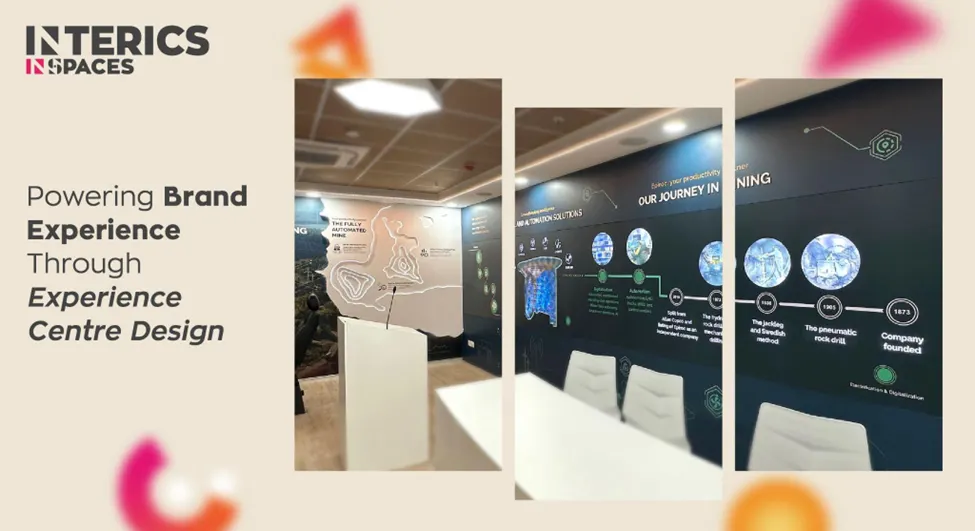
In today’s dynamic business landscape, leading brands are adopting Experience Centre design to create permanent environments that engage, educate, and inspire visitors. More than spaces for display or demonstration, Experience Centres transform a company’s vision, capabilities, and story into a unified brand experience one that is immersive, informative, and memorable. Designed as state-of-the-art visitor galleries, these centres allow audiences to interact with ideas, products, and achievements in real time, making complex narratives easier to understand and more impactful to experience.
Interics designs and delivers experience-led environments that bring strategy to life through engaging narratives, spatial design, and thoughtfully integrated technology. From mapping the visitor journey to designing interactive exhibits, history zones, and digital installations, each element is carefully curated to remain true to the brand while creating meaningful engagement. With end-to-end, turnkey solutions, Interics enables organisations to showcase innovation, demonstrate real-world impact, and build deeper connections ensuring every Experience Centre consistently communicates purpose, credibility, and long-term value.
The Strategic Purpose of Experience Centre Design
Experience Centres play a pivotal role in equipping brands to create deeper engagement and clarity around their value. They serve as a platform to engage stakeholders, educate partners, demonstrate innovation, and reinforce the organisation’s positioning with intention and depth.
What makes them powerful is their ability to transform identity and values into immersive, real-world instances. Through spatial storytelling, design elements, and curated interactions, audiences are able to understand not just what the organisation offers, but what it represents.
An Experience Centre creates a guided journey, one that reflects the brand’s vision and highlights its distinct strengths. In industries where offerings often appear similar, a well-designed journey becomes a differentiator in itself. It allows organisations to articulate their purpose, demonstrate their capabilities, and inform the stakeholders with a clear and memorable sense of what sets them apart.
Interics Designs Approach for Transformative Experience Centres
Designing an Experience Centre at Interics begins with defining the journey a visitor must experience, not just the content they will see. The process focuses on translating complex ideas, innovations, and achievements into engaging, real-time interactions that inform and inspire. By carefully structuring the flow of information through exhibits, interactive installations, and immersive storytelling, the Experience Centre is shaped as a cohesive environment that communicates intent, relevance, and value. Every element is planned to ensure the experience remains intuitive, immersive, and aligned with the brand’s long-term vision.
Our Experience Centre Design Methodology:
Building a Core Concept
We develop a central, unifying concept that reflects the brand’s purpose and sets the direction for spatial themes, content, interactions, and experience flow.
Translating Identity Into Space
Brand values, culture, and strategic priorities are transformed into spatial cues through materials, form, media, and multisensory elements to ensure every zone reinforces the organisation’s character.
Designing Layered Visitor Journeys
Each area is structured to reveal information in stages, ensuring clarity, engagement, and a sense of discovery as visitors move deeper into the experience.
Integrating Media & Technology Seamlessly
Digital installations, interactive content, and physical artefacts are choreographed to enrich understanding, not overwhelm balancing information with immersion.
Prototyping and Refinement
Content, interactions, and spatial elements are tested and refined to ensure the experience is intuitive, compelling, and aligned with stakeholder expectations.
Precision in Implementation
Final execution brings together spatial build, content integration, and technical delivery to create a cohesive, high-performance environment.
A well-designed Experience Centre is not just an environment it is a strategic ecosystem that shapes perception and drives stronger engagement.
Experience Centres as a Strategic Business Asset
An Experience Centre is a strategic asset that strengthens conviction, accelerates decision-making, and elevates a brand’s authority. It enables brands to control the narrative, demonstrate capability with clarity, and build trust through immersive, insight-driven engagement. When competitive offerings feel similar, a well-crafted experience becomes a decisive differentiator, one that influences partners, reassures investors, inspires teams, and reinforces brand leadership.
By transforming complex ideas into curated, tangible encounters, Experience Centres empower brands to showcase innovation, articulate value, and foster deeper relationships. The outcome is intentional and measurable: with stronger stakeholder alignment, greater confidence in the brand’s vision, and a powerful platform that supports long-term business growth.
Conclusion
Experience Centres are designed to express a brand’s purpose and performance through immersive, experience-led environments. At Interics, insight and creativity come together to craft spaces that strengthen relevance, build trust, and bring clarity to how a brand presents its strengths. Beyond engagement, these centres provide a dedicated environment where complex ideas become tangible and understanding becomes effortless. As brands move toward more experiential forms of communication, Experience Centre Design will continue to shape how they differentiate, connect, and lead in an increasingly competitive landscape.
